

From Rent to a Multi-Stream Model: A New Formula for Real Estate Profitability

In professional circles, Andrey Kononenko is known as someone who can “reengineer” the economics of an asset. Over nineteen years, he has moved from operational management of advertising infrastructure to developing his own profitability model for commercial real estate. We met to discuss why simply leasing space is no longer a sufficient strategy — and what separates a manager who sees an asset as a whole from one who sees only a lease agreement. Svetlana Orlova interviews Andrey Kononenko — Andrey, looking back: you began with advertising infrastructure, expanding networks of digital screens and working with hundreds of advertisers. Later, you moved into commercial real estate. At what point did you see the connection between those two worlds? — The connection was always there. It’s just rarely noticed. When you manage advertising surfaces, you think in terms of traffic, visibility, and the monetization of every square meter. You constantly ask: what is this location worth right now — depending on time of day, pedestrian flow, and surrounding context? When you manage real estate, traditionally you think in terms of tenants and rent levels. That mindset is much narrower. At one point I caught myself thinking: why do we consider the façade of one building an income-generating asset, while the façade next door is just a wall? It’s the same surface. The same traffic passing by. The difference is managerial vision. That was the beginning of a shift in thinking. I started looking at a building not as a unit of space, but as a system of monetization points. — You worked with portfolios where operating margins increased from 18 to 31 percent. That’s a significant shift for the market. Honestly — how is that achieved? — Through discipline and diversification. Most owners underestimate two things: the cost of vacancy and the potential of infrastructure. When a unit sits empty for 60 to 90 days, it’s often dismissed as a “market pause.” That’s normal, the market is like that. But if you annualize those pauses, they become systemic losses. Across a multi-asset portfolio, they can absorb 15 to 20 percent of potential income. We reduced the time between tenants by more than half. That requires a different approach — proactive rather than reactive. You start looking for the next tenant before the previous one leaves. It sounds obvious, but very few people do it systematically. At the same time, we introduced advertising monetization in places where it had never been considered. It’s not suitable everywhere — you need traffic and visibility — but where conditions allow, it becomes pure additional income without adding another tenant. Most importantly, we stopped managing reactively. We began operating ahead of events. That’s the real shift. — So you essentially turned the building into a diversified financial instrument? — To put it plainly, yes. For a long time, real estate was treated as a passive asset: buy it, lease it, wait for appreciation. That worked in an era of inexpensive capital and a rising market. When prices move up on their own, managerial inefficiency remains invisible. But 2026 has shown that the market no longer tolerates passivity. Investors want control, predictability, and transparency. Not only private investors — institutional ones as well. When a fund evaluates an asset, it looks beyond location and physical condition. It looks at the quality of management. When a property has multiple revenue streams, it becomes more resilient. If one tenant leaves, it’s unpleasant — but not catastrophic. When an owner sees real-time data on occupancy, vacancy duration, and tenant satisfaction, they manage rather than hope. Those are fundamentally different positions. — How do you structure relationships with tenants within this model? Multi-stream monetization requires closer interaction. — That’s a very important question — and often overlooked. In the traditional model, a tenant is a source of income. They sign a lease, they pay, that’s it. In our model, a tenant is a partner in how the property functions. Their business performance directly affects the health of the asset. We introduced regular meetings — not to discuss complaints, but to understand how the tenant’s business is performing. If their traffic is declining, we want to know before they submit a termination notice. Sometimes we can help: coordinate a joint marketing effort, adjust space configuration, create synergy with neighboring tenants. It requires effort. But retaining a strong tenant is always less expensive than replacing one. — You are not only a practitioner but also an active author and reviewer of academic research. Why pursue academic work when your practical results already speak for themselves? — Because practice without systematization quickly becomes a collection of isolated cases. I always wanted the model to be reproducible — not just a “series of successful projects,” but a management logic that can be explained, transferred, and applied in different contexts. Working with academic publications and reviewing research in a professional journal helps maintain rigor. In that environment, you cannot rely on general statements — you must justify your conclusions. There are peers who ask difficult questions. For me, it’s a way of stress-testing my ideas. If a concept can be formulated as a hypothesis, tested against data, and defended before a critical audience — it’s real. If not, it’s intuition that hasn’t yet matured into knowledge. I also believe that property management as a discipline remains under-researched. Much of what happens in the market never enters structured databases. It exists as tacit knowledge in practitioners’ minds. I want to change that. — Many managers speak about increasing profitability. You went further — you formalized a structured methodology and began licensing it. That’s no longer consulting; it’s an intellectual product. Why take that step? — Because it became clear that this was a system. When an approach produces repeatable results across different cities, asset types, and client teams, it stops being personal experience and becomes a model. And a model must be protected and transmitted correctly. Otherwise it gets fragmented. People take individual elements without understanding the underlying logic, fail to achieve results, and conclude the approach does not work. That affects reputation — and more importantly, other people’s capital and time. Licensing creates structure: how the methodology is transferred, who is authorized to apply it, how implementation quality is monitored. It’s not restriction — it’s standardization. It also changes scale. A consultant works with ten clients a year. A methodology can work with hundreds. — Tell us about a case that best illustrates your philosophy — a property or situation you consider a turning point. — There was a regional shopping center — not flagship, not premium, just a solid asset in a good location. The owner complained about stagnation: tenants leaving, new ones weaker, rents flat for years. We started with an audit. The first thing we noticed was a large parking area that was forty percent empty even during peak hours. No one had ever monetized that traffic. It was simply land. Second, the façade faced a busy highway with strong visibility. There were no advertising structures — historically “it had never been done.” Third, the anchor tenant occupied space under a five-year-old agreement indexed below inflation. In reality, it was being indirectly subsidized by other tenants. Eight months later, the property looked different. Part of the parking area was monetized through a partnership with a neighboring business. The façade generated advertising income. The anchor tenant’s agreement was renegotiated — without conflict — because we presented transparent numbers and offered value in other areas. Margins increased. But more importantly, the owner began to see the property as a system. That was the turning point. — If we remove the numbers and formulas, what is the philosophy behind your approach? — Respect for the asset’s potential. A building is almost always capable of generating more income than its owner assumes. The question is whether we see its full economic picture — or only one fragment. Most owners look at their property through a single lens: the lease agreement. But a building has a façade, land, infrastructure, traffic, time. All of these are resources. The question is who recognizes them — and how they are managed. I often say: there are no uninteresting assets. There is only limited managerial vision. — Final question. If a major property owner tells you, “Everything is stable. Why change anything?” what do you say? — Stability is often slow-moving loss. The market does not stand still. Tenants are more demanding, competition between properties is sharper, buyers of real estate are more selective. If an asset does not evolve, it does not remain in place — it gradually loses position. If a property depends on a single revenue stream, it is vulnerable. One large tenant leaves — and you face a crisis. If vacancy periods are seen as inevitable, that’s a managerial blind spot. I’m not trying to create fear. I suggest looking at the asset honestly. How much does it actually generate? How much could it generate? The difference between those two numbers is the cost of “stability.” The market has become more precise. It rewards system thinking. In the end, the winner is not the one with the most square meters — but the one who understands their economics best.
Categories
Recent Posts

6 Tips to Make Your Home Look More Expensive

How Much Will New Home Upgrades Cost?

Negotiating Tip 44: The Fall Back Plan

Buying a condo with a mortgage may soon get more complicated. Here's why

Buying a condo could soon get more complicated. Here's what to know.

We see greater price stability and performance in UAE properties as speculation falls: Researcher

New York housing market is up to 80% cash for buyers in recent years: Corcoran Group's Noble Black

Real estate as an AI beneficiary: Indian REIT sees chip, telco firms buying in

Inspection vs. Appraisal: How Do They Compare?

6 Things You Can Do to Prepare for a Home Appraisal
GET MORE INFORMATION
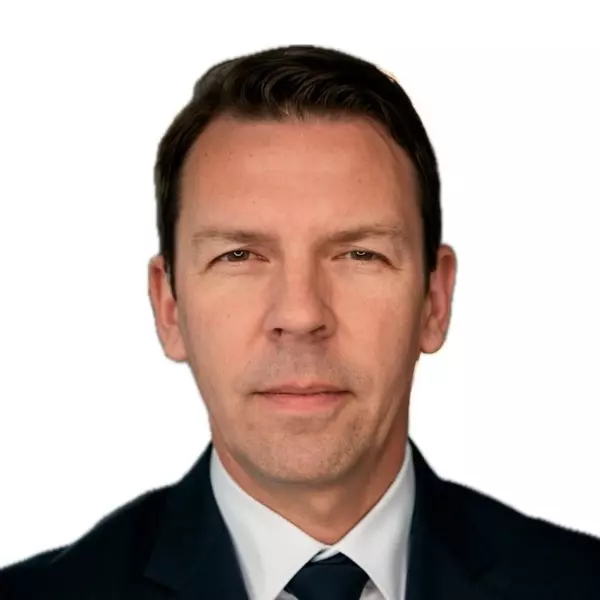
Tim Zielonka
Managing Broker / Realtor | License ID: 471.004901
+1(773) 789-7349 | realty@agenttimz.com